


kg77 | The Rising Impact of Educational Games in Modern Learning
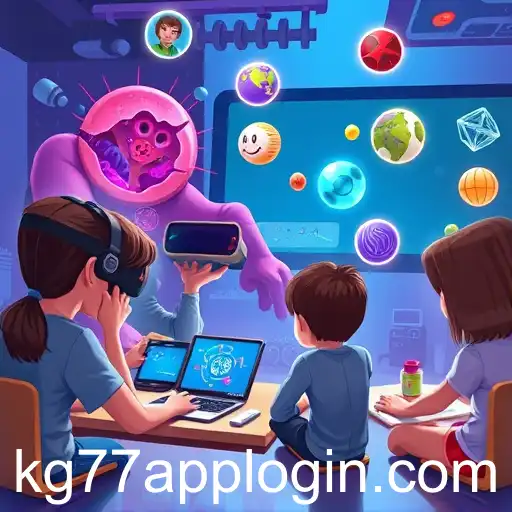
In today's digitally driven world, educational games have emerged as a significant tool in modern learning environments. These games, often tagged with keywords like 'kg77', have not only transformed the way education is delivered but have also made learning an engaging and interactive process. Educational games are designed to combine fun with education, allowing students to develop critical skills while enjoying the interactive nature of gaming.
One of the primary benefits of educational games is their ability to enhance cognitive development. By integrating curriculum-based content with game mechanics, these games engage multiple senses, which can enhance memory retention and understanding. They offer a hands-on learning experience that can adapt to various learning styles, making them accessible to a broader range of students. Additionally, educational games often require problem-solving and critical thinking, skills that are essential in the real world.
The emergence of gamification in education further illustrates the appeal of educational games. Gamification takes elements typical of games—such as points, levels, and challenges—and applies them to non-game contexts. This has proven to be a powerful motivator in classroom settings, encouraging students to engage more deeply with the educational material.
Moreover, educational games can support collaboration and social skills. Many games are designed to be played in groups, both in-person and online, fostering teamwork and communication among players. This aspect is particularly important in a world where collaborative skills are increasingly valued in professional environments.
Recent advances in technology have only amplified the potential for educational games. Virtual reality (VR) and augmented reality (AR) are being integrated into educational games, offering immersive learning experiences that were previously unimaginable. These technologies can transport students to different environments—whether it’s exploring the inside of a human cell or walking through ancient civilizations—thereby making abstract concepts tangible and easier to grasp.
However, the incorporation of educational games in traditional learning systems is not without challenges. There is an ongoing debate about screen time and its implications for young learners' health and well-being. It is vital for educators and parents to find a balance, ensuring that educational games are used to complement, rather than replace, traditional learning methods.
In conclusion, educational games provide a promising avenue for enriching learning experiences. They harness the engaging nature of games to enable deeper learning, foster critical thinking, and support numerous educational outcomes. As technology continues to evolve, the future of educational games looks promising, bringing with it endless possibilities for learners of all ages.
